2026-08-17 · David Ellis
Dealing with Humidity in Lawrence Home Remodels
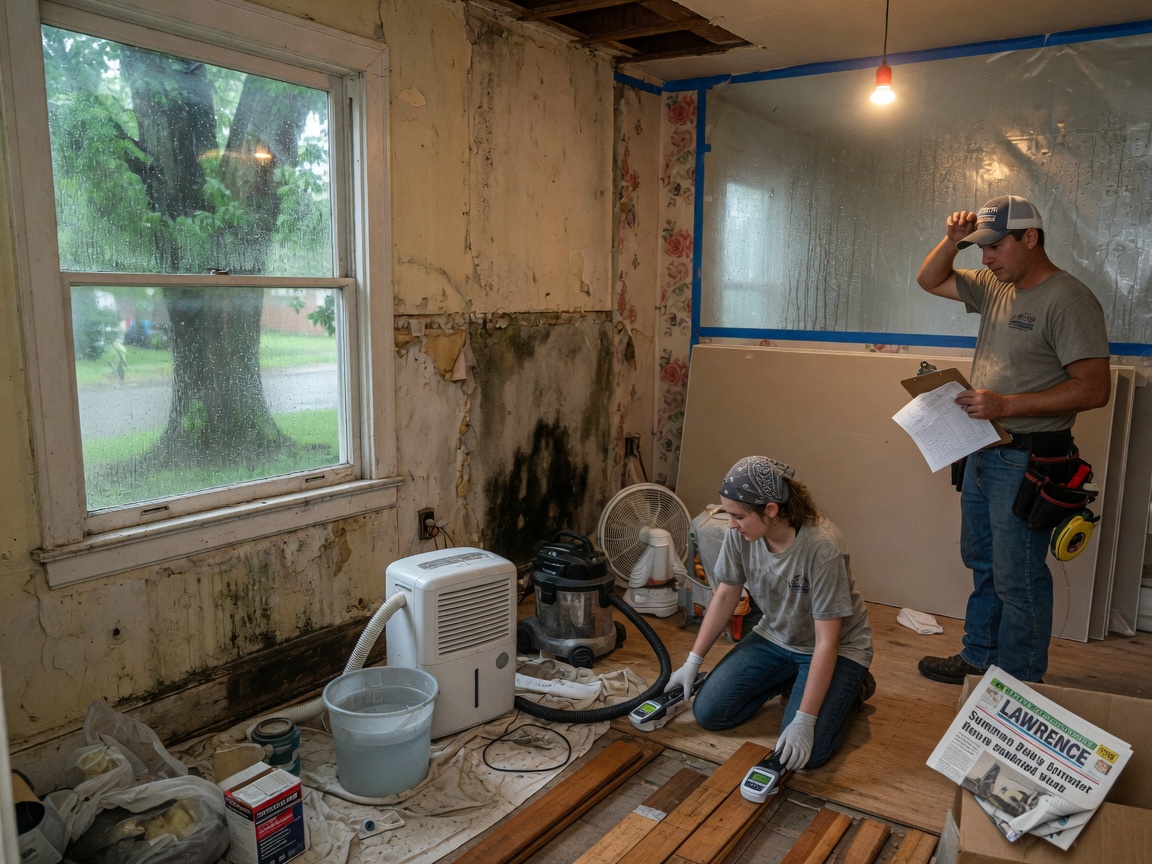
In Lawrence homes, addressing humidity starts with selecting moisture-resistant materials and installing robust ventilation systems rated for at least 50 cubic feet per minute in wet zones to limit mold risk during and after remodels.
Understanding Local Humidity Challenges
Lawrence sits in a humid continental climate with hot summers that push relative humidity above 70 percent for weeks and cold winters that trap indoor moisture when windows stay closed. These swings hit older homes in Old West Lawrence and Downtown Lawrence hardest because original plaster and single-pane windows allow condensation on walls and floors. Homeowners near the University of Kansas or Haskell Indian Nations University often see similar issues in basements and kitchens where steam from daily use adds to the load. Proper planning prevents warped flooring and peeling paint that appear within two years when humidity is ignored. Checking dew points before starting work helps crews schedule drywall and paint on drier days.
Material Selection for Humid Conditions
Choose cement board instead of standard drywall in bathrooms and choose engineered hardwood with a moisture content below 12 percent for living areas. Vinyl plank flooring rated for 100 percent relative humidity performs well in East Lawrence kitchens while avoiding cupping that hits solid oak within 18 months. Paint with mildew-resistant additives rated for 2,000 scrub cycles lasts longer on walls near Clinton Lake where summer storms raise indoor moisture. For whole-home projects, fiber-cement siding on additions resists the freeze-thaw cycles that follow humid summers. These selections add 10 to 15 percent to material costs but cut callback repairs by half over five years.
Ventilation Strategies During Remodels
Run temporary exhaust fans pulling 80 cubic feet per minute in each work zone and vent them directly outside rather than into attics. Install continuous ridge vents and soffit intakes on roof projects to maintain airflow once the space is closed in. In basement finishing jobs, place dehumidifiers set to 50 percent relative humidity for the first 30 days after drywall. Pair these with smart thermostats that track indoor humidity levels and alert owners when readings climb above 60 percent. Such steps keep mold spores below 500 per cubic meter during construction in Barker and Oread neighborhoods.
Moisture Control in Kitchen and Bath Areas
During Kitchen Remodeling in Lawrence or Bathroom Remodeling in Lawrence, seal all penetrations around pipes with silicone rated for 25-year submersion. Slope shower floors at one-quarter inch per foot to direct water to drains within 10 seconds. Use backer board seams taped with alkali-resistant mesh and thin-set mortar to block vapor transmission. These details matter most in homes built before 1980 around Massachusetts Street where original plumbing leaks compound humidity damage.
Long-Term Performance After the Remodel
Schedule follow-up visits at 6 and 12 months to check caulk lines and humidity readings. Homeowners updating older homes in Lawrence Kansas can review additional guidance in Updating Older Homes in Lawrence Kansas. For winter projects, consult Winter Remodeling Considerations for Lawrence Homes to balance heating loads with moisture control. Consistent monitoring keeps interior humidity between 40 and 55 percent year-round and extends finish life by 8 to 12 years.